


What arthroscopy (keyhole surgery) is
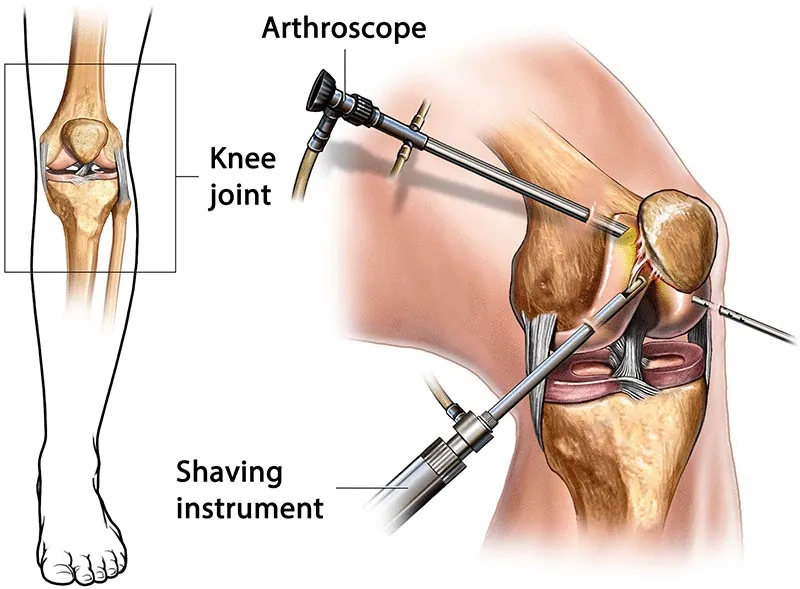
Arthroscopy is keyhole surgery. A thin camera (arthroscope) and slim instruments are passed into the joint through small cuts, so the surgeon can see and treat the damage without opening the joint. It usually means less pain from the incision and a quicker start to rehabilitation than open surgery.
ACL and ligament injuries
The anterior cruciate ligament (ACL) is commonly torn by a twist or sudden change of direction, often with a pop and swelling. The knee may then feel unstable. ACL reconstruction replaces the torn ligament with a graft, usually taken from your own tendons. Dr. Chandrashekar also treats combined injuries involving several ligaments.
Meniscus tears, repair and transplant
The menisci are two C-shaped cushions inside the knee. Tears cause pain, swelling, catching or locking. Depending on the tear, treatment may be:
- Meniscal repair, stitching the tear to preserve the meniscus wherever possible
- Partial meniscectomy, trimming a torn portion that cannot heal
- Meniscal transplant, replacing a largely lost meniscus with a donor graft in selected patients
In 2018 Dr. Chandrashekar performed Karnataka's first meniscal transplant, on a patient from Yemen, as reported in Deccan Chronicle (opens in new tab) and other newspapers.
Cartilage damage
Cartilage injuries in younger people can lead to early arthritis if left untreated. Options to restore the joint surface include:
- Microfracture, stimulating repair tissue from the underlying bone
- Mosaicplasty, transferring small plugs of healthy cartilage and bone
- Autologous chondrocyte implantation, growing your own cartilage cells in a laboratory and implanting them
Shoulder injuries and arthroscopy
Arthroscopic surgery is also used for shoulder instability and recurrent dislocation, rotator cuff tears and SLAP tears of the labrum.
Rehabilitation and return to sport
Rehabilitation is as important as the operation. A physiotherapy plan begins soon after surgery, restoring movement first, then strength, balance and finally sport-specific training. Returning too early raises the risk of injuring the knee again, so progress is guided by milestones rather than the calendar.
Questions about sports injuries
No. Some people with lower activity demands manage well with physiotherapy and bracing. Reconstruction is usually advised for people who want to return to pivoting sports, or whose knee keeps giving way.
When most of the meniscus has been lost, a donor meniscus can be transplanted to restore cushioning in selected younger patients. Dr. Chandrashekar performed Karnataka's first meniscal transplant in 2018.
It depends on the injury and the procedure. Simple arthroscopic procedures may allow a return within weeks, while ACL reconstruction usually needs several months of structured rehabilitation before returning to competitive sport.
Talk it through with Dr. Chandrashekar
A consultation is where every option is weighed, including whether surgery is needed at all.